A walkthrough of identifying microbial species on the International Space Station's dining table using metagenomics. DNA sequencing data from a NASA study is processed with fastp for quality trimming, then classified with kraken2, a fast k-mer-based taxonomic classifier. The analysis reveals bacteria common to human skin, hospital environments, and food production — including a kimchi-associated strain (Leuconostoc mesenteroides MSL129) that appears to have survived and thrived on the ISS. The post also explains how kraken2 achieves its speed through minimizers, compact hash codes, and exact k-mer matching rather than alignment, drawing parallels to locality-sensitive hashing techniques used in web search and plagiarism detection.
Nguồn: https://towardsdatascience.com/space-mould. 8sync News chỉ tóm tắt và dẫn link; bản quyền nội dung thuộc tác giả và nguồn gốc.
Kết hợp thư viện sinh học gget mã nguồn mở với các mô hình ngôn ngữ lớn (LLM) tiên tiến cho phép xây dựng một nhà khoa học nghiên cứu AI có khả năng truy xuất dữ liệu sinh học thời gian thực từ các cơ sở dữ liệu uy tín (Ensembl, UniProt, NCBI, AlphaFold, BLAST,...) và áp dụng suy luận khoa học dựa trên bằng chứng đã được xác thực. Kiến trúc này ngăn ngừa hiện tượng "ảo giác" bằng cách tách biệt quá trình truy xuất dữ liệu khỏi lý luận khoa học, đồng thời vượt trội hơn phương pháp RAG truyền thống nhờ truy vấn trực tiếp vào cơ sở dữ liệu động thay vì chỉ dựa vào chỉ mục tài liệu tĩnh.
Lập trình viên muốn tự động hóa nghiên cứu sinh học sinh học sinh học thông minh và tiết kiệm thời gian với các mô hình AI tiên tiến mà không phải phụ thuộc vào các giải pháp truyền thống rẻ tiền và không hiệu quả.
Researchers at the Centre for Genomic Regulation have developed a device called the Eye-in-a-Care-Box (ECaBox) that uses perfusion to keep donor eyes viable outside the body. By delivering oxygen-rich fluid through the eye's artery, the device significantly slows degeneration compared to untreated eyes. Tests on pig eyes showed that perfused eyes regained the ability to respond to light after about 15 minutes, with some maintaining that ability for over 10 hours. Human donor eyes treated in the device also showed better retinal preservation. The team hopes the ECaBox could eventually enable viable whole-eye transplants and serve as a research platform that reduces animal experimentation. The work is currently available as an unreviewed preprint.

AWS HealthOmics now supports ephemeral storage for private workflow tasks, providing dedicated scratch space mounted at /tmp. Each task gets 16 GiB by default at no extra cost, configurable up to 3,072 GiB per task via WDL, Nextflow, or CWL directives or the StartRun API. This benefits I/O-heavy bioinformatics workloads like genomic sequence alignment, BAM sorting, and variant calling by isolating scratch I/O from shared run storage. All ephemeral volumes are encrypted and automatically deleted on task termination. The feature is available across all regions where HealthOmics operates.
Stripe, Anthropic, the OpenAI Foundation, and other backers are funding Intercept, a new $500-million nonprofit aimed at preventing respiratory infections including the common cold and flu. The organization will fund vaccines, broad-spectrum antiviral approaches, and large-scale air-cleaning technologies. Inspired by COVID-19 vaccine development, Intercept's scientific advisers believe modern tools like RNA drugs, computational protein design, and engineered virus-trapping proteins make it technically feasible to counter many viruses simultaneously. The initiative mirrors Stripe's earlier Frontier carbon removal program, targeting problems that are technically solvable but lack commercial incentives.

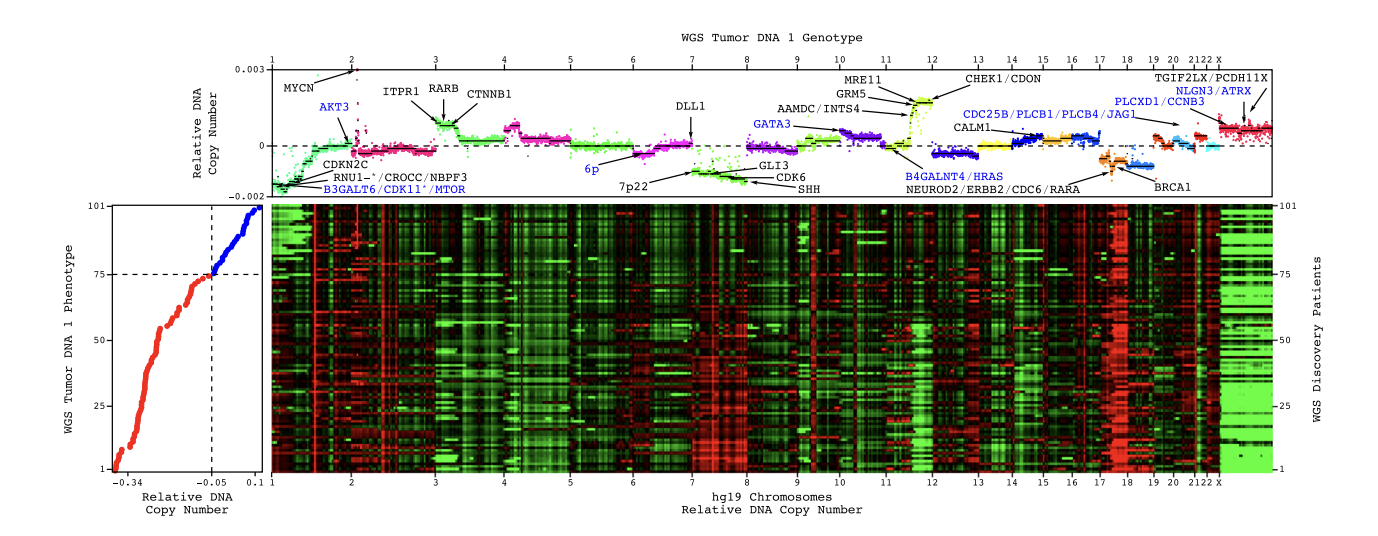
A University of Utah-led team developed a quantum mechanics-inspired AI framework for extracting reliable biomedical signals from small, noisy, high-dimensional multiomic datasets. The method uses spectral decompositions and concepts analogous to quantum superposition and entanglement to find linked patterns across tumor DNA, blood DNA, and tumor RNA simultaneously. Applied to neuroblastoma data from 101 patients, it identified two new survival predictors that outperformed the established MYCN amplification biomarker across multiple data types and validated in a cohort of 398 patients. The approach does not run on quantum hardware — the 'quantum' refers to the mathematical structure. Limitations include reliance on existing datasets, no prospective clinical trial, and the need for broader independent validation before clinical use.
NVIDIA BioNeMo Agent Toolkit enables building AI scientists for life science research by wrapping biomolecular AI models (protein folding, molecular docking, molecular generation, genomics) as agent-callable tools called BioNeMo Skills. These skills expose models like OpenFold3, Boltz-2, DiffDock, GenMol, and others via NIM endpoints or local deployments, with MCP server wrappers for open models. The toolkit provides structured tool descriptions including purpose, inputs, parameters, expected artifacts, and failure modes so agents can reliably select and use the right model. Benchmarks using Codex CLI with GPT-5.5 show a 2x improvement in passing assertions per token consumed when agents use BioNeMo Skills versus without. Teams can start with hosted NIM endpoints and move to local deployment for latency-sensitive or iterative workloads.