Loading feed…

API Evangelist0 Hot0 comments7 min read
Healthcare: A Bundle For The Shape Of The Answer
Earlier this week I wrote that the decoder only pours part of the bedrock, and started building bundles that pair a JSON Schema with OpenLint-format rules so...
Source: https://apievangelist.com/2026/11/04/healthcare-a-bundle-for-the-shape-of-the-answer. 8 Sync News only summarizes and links out; content copyright belongs to the authors and original sources.
8 Sync ecosystem
One account, the whole ecosystem
Read the news here, practice coding, follow structured courses and train for IELTS on our sibling products — all connected through one 8 Sync account.
8syncdev.com
8syncdev.comThe ecosystem home: product overviews, blog and full pricing.
ExploreCourses
course.8syncdev.comLearn along a clear roadmap: videos, auto-graded quizzes, certificates and mentors who ship for a living.
View the roadmapCoding practice
coding.8syncdev.com1,000 DSA problems in Vietnamese, auto-graded across 7 languages — many FREE, right in your browser.
Practice for freeIELTS
ielts.8syncdev.comAI grading for all four IELTS skills with detailed rubric feedback.
Try it freeZUS — AI IDE
zus.8syncdev.comA 22 MB AI IDE for Vietnamese devs.
Download freemind0
mind0.8syncdev.comOrganizational memory for AI agents.
ExploreAcoLeads
home-acoleads.8syncdev.comAI that staffs your Fanpage and qualifies leads for you.
Try itRecommended for you

Daily Dose of Data Science | Avi Chawla | Substack26 Hot8 min
7 MoE routing strategies in production, clearly explained
+ a practical learning checklist to learn AI engineering.
Daily Dose of Data Science | Avi Chawla | Substack143 Hot7 min
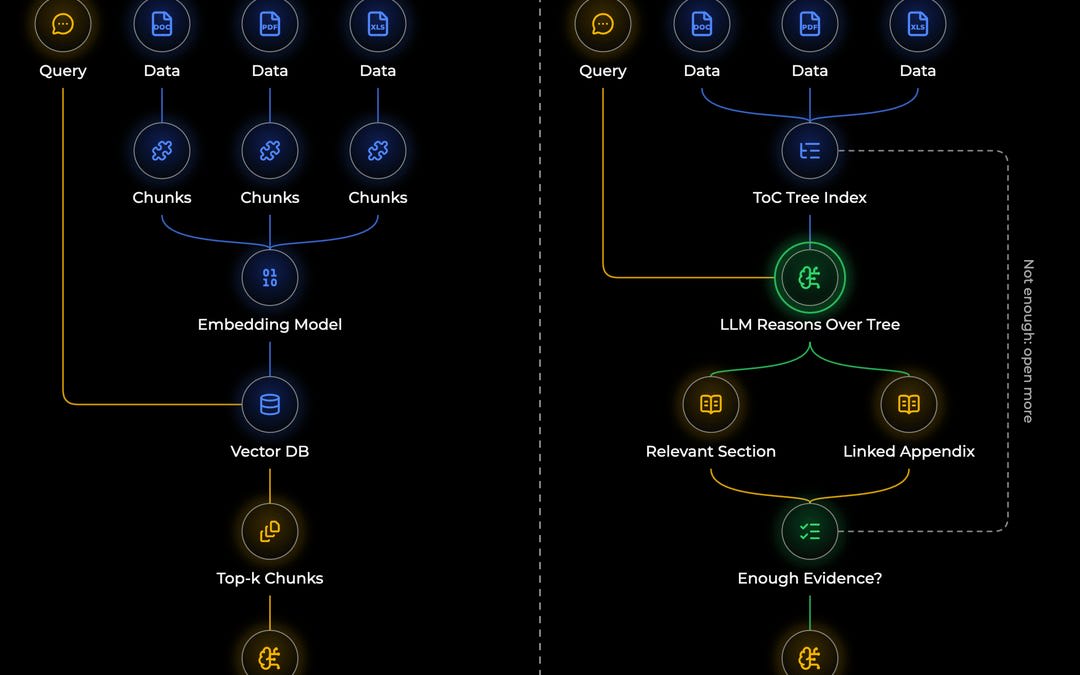
RAG vs. Vectorless RAG, clearly explained!
...explained visually (with tradeoffs in production).

Flavio Copes122 Hot6 min
How to run an LLM locally
Run an LLM locally with Ollama. See how much memory you need, where LM Studio and llama.cpp fit, and how to call the model from code.

DEV1 Hot3 min
When the Political Shift Hits the Cluster: What the 2026 Midterms Mean for AI Infra and Code
If you’ve been watching the tech sector and macroeconomic feeds over the last 48 hours, you’ve... Tagged with discuss, ai, webdev, programming.
scottstuff.net1 Hot19 min
Video Encoding for the Web in 2026: Part 1: Introduction
Roughly 18 months ago, I started working on streaming video from this site. The web side of that is fairly easy — use Shaka Player or similar to handle the JavaScript for playback, and serve up a bunch of .mp4 files with a DASH manifest. You end up with a lot of bytes, but very little actual complexity. They’re all just files that any web server can serve. The hard part turned out to be creating the video files. The problem was (and is) that there are too many choices that need to be made. You need to pick a set of resolutions to serve, you need to pick a set of codecs to support, and then you need to configure each codec at each resolution to get reasonable quality at a reasonable bitrate. None of the choices that need to be made here have a simple, correct answer. Everything ends up involving tradeoffs. This is the first of a set of 7 or 8 posts that aim to explain the tradeoffs, explain the choices that I’ve made for them, offer the data behind the choices, and then try to provide guidance and tools so you can make your own choices. Here’s what I’m planning on posting over the next few weeks: Part 1: Introduction (this post) Part 2: Methodology and Tooling Part 3: H.264 Part 4: H.265 Part 5: AV1 Part 6: Hardware vs Software encoding Part 7: Source Formats and Encoding Quality I may also add another post comparing encoding time on various platforms, depending on how much energy I’m willing to put into it.

SQL Authority136 Hot2 minAI
AI in Production Without a WHERE Clause
Bối cảnh triển khai AI mà không có bước review rủi ro giống như thiếu một WHERE clause trong SQL có thể dẫn đến đêm dài khắc phục sự cố. Nguyên nhân kỹ thuật nằm ở việc các model AI có thể tạo ra dữ liệu không mong muốn khi không có bộ lọc phù hợp. Hệ quả có thể rất nghiêm trọng khi hệ thống AI vô tình tạo ra nội dung độc hại, sai lệch hoặc vi phạm chính sách. Đáng học hỏi là bài nhấn mạnh việc xác định rõ vị trí của cơ chế "phanh" (brake) trong hệ thống AI và ai chịu trách nhiệm kiểm soát nó.
Bài viết này giải thích tại sao thiếu bước kiểm duyệt trong AI sản xuất có thể dẫn đến hậu quả nghiêm trọng như lỗi query SQL không có WHERE clause.
Daily Dose of Data Science | Avi Chawla | Substack12 Hot9 min
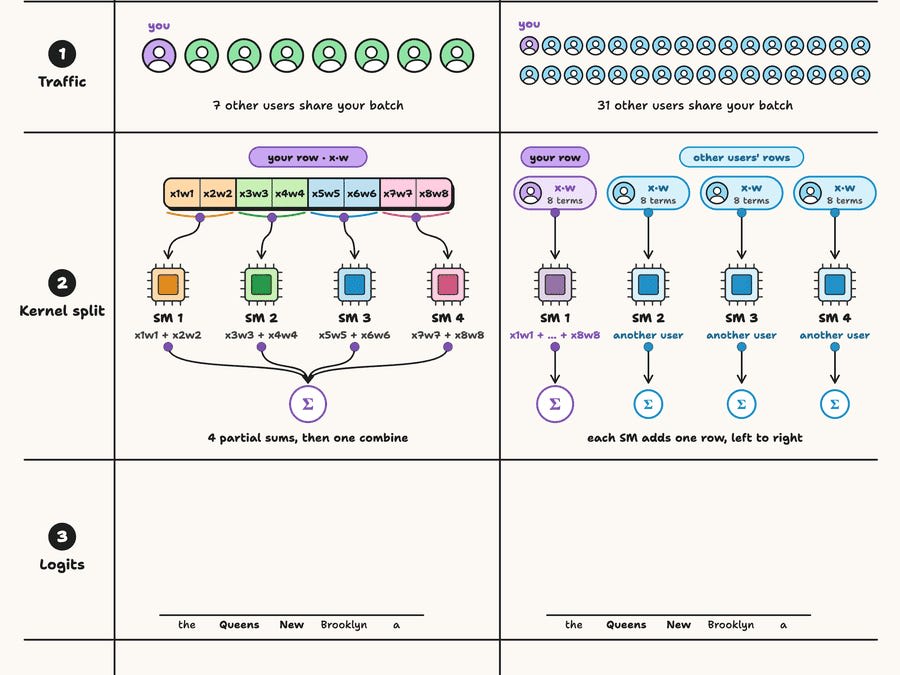
Why Other Requests Change Your LLM’s Output
+ an update on Harness Engineering 2.0.

Datadog1 Hot9 min
How we investigated prompt cache misses with Datadog
An investigation of prompt cache misses in internal AI applications by using Datadog Cloud Cost Management and Agent Observability.
Comments
Loading comments…