Đang tải bảng tin…
Hackaday0 Hot0 bình luận2 phút đọc
MousePods Reverse Engineers Head Tracking Data From Stubborn AirPods
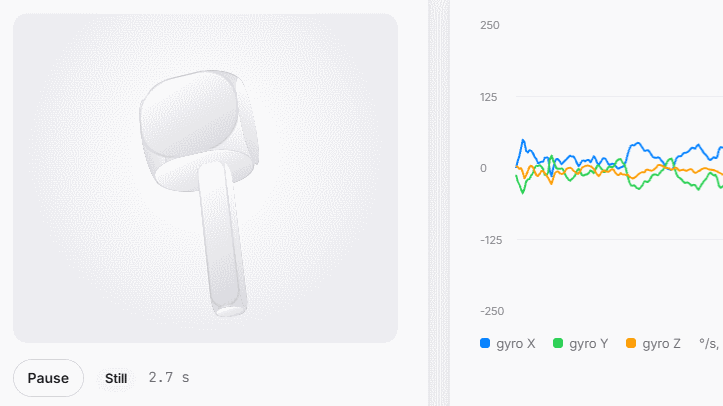
MousePods is a Python tool that reads motion sensor data from Apple AirPods on Linux and turns it into mouse input, with no Apple host needed. Matteo Gaudioso reverse-engineered the AirPods 3, which behave differently from other AirPods models and had resisted earlier head-tracking tools. He used Claude Code to run hundreds of probes against the devices. The key discovery: Linux's default MTU is too small to carry the full sensor payload, and raising it to match iOS's larger default reveals the missing motion data. MousePods also outputs to opentrack for head tracking in flight or racing simulators. It's confirmed working on AirPods 3 and AirPods Pro 2.
Nguồn: https://hackaday.com/2026/11/06/mousepods-reverse-engineers-head-tracking-data-from-stubborn-airpods. 8 Sync News chỉ tóm tắt và dẫn link; bản quyền nội dung thuộc tác giả và nguồn gốc.
Hệ sinh thái 8 Sync
Một tài khoản, cả hệ sinh thái
Đọc tin ở đây, luyện code, học theo lộ trình và luyện IELTS trên các sản phẩm anh em — tất cả kết nối với nhau trong hệ sinh thái 8 Sync.
8syncdev.com
8syncdev.comCổng chính của hệ sinh thái: giới thiệu sản phẩm, blog và bảng giá trọn bộ.
Khám pháKhóa học
course.8syncdev.comHọc theo lộ trình rõ từng chặng: video, quiz chấm tự động, certificate và mentor đang làm nghề.
Xem lộ trìnhLuyện code
coding.8syncdev.com1.000 bài DSA, đề tiếng Việt, chấm tự động 7 ngôn ngữ — nhiều bài FREE, chạy ngay trên trình duyệt.
Luyện miễn phíIELTS
ielts.8syncdev.comChấm bốn kỹ năng IELTS bằng AI, phản hồi chi tiết theo rubric.
Dùng thử miễn phíZUS — IDE AI
zus.8syncdev.comAI IDE 22 MB cho dev Việt.
Tải miễn phímind0
mind0.8syncdev.comBộ nhớ tổ chức cho AI agent.
Khám pháAcoLeads
home-acoleads.8syncdev.comAI trực Fanpage, tự sàng lọc lead.
Dùng thửĐề xuất cho bạn

Hackaday1 Hot10 phút
DeviceTree For Hackers: Intro
A leaked Raspberry Pi DeviceTree file reveals hardware details of the Pi Zero 3W, including a BCM2711 chip, PCIe support, a power button, an extra LED, and an eMMC option. This serves as the entry point for an intro to DeviceTree, the format that tells Linux kernels what CPU, drivers, and interfaces a board has. DeviceTree source files (.dts, .dtsi) compile into binary .dtb/.dtbo files the kernel reads, and the device-tree-compiler package handles both compiling and decompiling. The guide covers includes, base files, and overlays, recommends learning from Raspberry Pi's overlay directory and repos like Radxa and Armbian, and warns that LLMs sometimes hallucinate overlay properties.

Bootlin1 Hot6 phút
sbom-cve-check 1.4.0 released
sbom-cve-check 1.4.0 has been released, adding an OpenVEX exporter and improving Linux kernel CVE analysis and version parsing. The new openvex export type, contributed by Andrey Zhizhikin, generates OpenVEX v0.2.0 documents with VEX assessments, configurable via a new --export-author option. Kernel CVE handling now distinguishes mainline versions like 6.12 from stable versions like 6.12.34 to reduce false positives and negatives. Version parsing also gained support for formats like 0.9~rc5 and Ubuntu-style suffixes, and build metadata like 1.25.0+4f85853f64 is now ignored per semver rules. Install or upgrade with pip install --upgrade "sbom-cve-check[extra]".

Hacker News31 Hot1 phút
Dux: Free, open-source Wayland desktop shell with file manager and theming
A modern Linux desktop suite with beautiful widgets and powerful monitoring - optimized for niri, Hyprland, mangowm, Sway, and Miracle WM.

XDA Developers2 Hot4 phút
Distro choice doesn’t matter anymore, and that’s why 2027 is the year Linux finally goes mainstream
Picking your distro used to be the hard part, but it doesn't matter nearly as much as it once did

Hacker News2 Hot13 phút
Show HN: STE80 Humanizer – de-AI text by writing 80% of the way to ASD-STE100
STE80 Humanizer: agent skill that removes AI tells and rewrites text 80% of the way to ASD-STE100 (Simplified Technical English), the method Andrej Karpathy shared. - Dodaios/ste80-humanizer

freeCodeCamp259 Hot2 phút
Learn Real-World Penetration Testing: Hands-On Ethical Hacking Crash Course
Understanding how malicious actors infiltrate networks is the first step to building resilient infrastructure. To help developers and aspiring security analysts learn the fundamentals of offensive sec

Simon Willison1 Hot10 phút
Locating the source of a mysterious beep with Claude
Simon Willison used Claude Code to build Beep Locator, a system that triangulates the source of an intermittent beeping sound using multiple devices as listeners. The Python web server coordinates phones, iPads and laptops over WebSockets, using Fast Fourier Transform beep detection and a chirp to align recorded clips, and Willison names the 2007 BeepBeep acoustic ranging paper as the research Claude found. The tool located the beep to within about 40cm, which turned out to be an ancient carbon monoxide detector that wanted its batteries replaced. He started with Claude Code Cloud running Opus 5.5 on his iPhone, then continued on his laptop after Fable 5.2 was released, iterating live by pushing new JavaScript to listening devices so they did not need to be manually restarted.

Bram.us349 Hot1 phútAI
GTA.js, a reimplementation of the 1997 Grand Theft Auto engine in JavaScript and WebGL
Dự án GTA.js tái tạo lại engine của game Grand Theft Auto năm 1997 bằng JavaScript và WebGL, có thể chơi tại gtajs.wtf. Đây là bản reimplement chứ không phải emulator, nên một số vật lý và animation khác với bản gốc, nhưng engine nhiệm vụ chính xác dựa trên tài liệu mtd.doc. Tác giả sử dụng Gemini AI để triển khai hầu hết các tính năng, tham khảo tài liệu mở, ghi chú cộng đồng và trí nhớ cá nhân về game. Hiện tại game đã chơi được nhưng cảnh sát (cops) vẫn chưa được implement.
Lập trình viên nên đọc bài này để khám phá cách tái tạo lại engine game cổ bằng JavaScript và WebGL từ con số không.
Bình luận
Đang tải bình luận…