Loading feed…

InfoQ1 Hot0 comments34 min read
Distributed LLM Inference on Kubernetes with llm-d, Wasm, & TornadoVM
Edoardo Vacchi covers the evolving landscape of WebAssembly on the backend, running Java workloads on GPUs using TornadoVM, and optimizing distributed AI inference using llm-d and vLLM on Kubernetes.
Source: https://www.infoq.com/podcasts/distributed-llm-inference-kubernetes. 8 Sync News only summarizes and links out; content copyright belongs to the authors and original sources.
8 Sync ecosystem
One account, the whole ecosystem
Read the news here, practice coding, follow structured courses and train for IELTS on our sibling products — all connected through one 8 Sync account.
8syncdev.com
8syncdev.comThe ecosystem home: product overviews, blog and full pricing.
ExploreCourses
course.8syncdev.comLearn along a clear roadmap: videos, auto-graded quizzes, certificates and mentors who ship for a living.
View the roadmapCoding practice
coding.8syncdev.com1,000 DSA problems in Vietnamese, auto-graded across 7 languages — many FREE, right in your browser.
Practice for freeIELTS
ielts.8syncdev.comAI grading for all four IELTS skills with detailed rubric feedback.
Try it freeZUS — AI IDE
zus.8syncdev.comA 22 MB AI IDE for Vietnamese devs.
Download freemind0
mind0.8syncdev.comOrganizational memory for AI agents.
ExploreAcoLeads
home-acoleads.8syncdev.comAI that staffs your Fanpage and qualifies leads for you.
Try itRecommended for you

Thorsten Hans1 Hot5 min
Wasmtime 48 Denies Sockets by Default: What Breaks and Fixes
Wasmtime 48 denies TCP/UDP sockets by default. See what breaks, how to restore it on the CLI, and how to opt in when embedding Wasmtime.

Richard Geldreich's Blog1 Hot1 min
Richard Geldreich's Blog: Basis Universal v2.6 update
Basis Universal v2.6 will expose its real-time analytical encoders through new APIs and tooling, with a new command line tool called basisu_pack shipping in January 2027. These encoders don't require SIMD, yet many are faster than other older search-based SIMD encoder designs. The update also plans official Python wheels for several platforms, transcoding performance increases, and large compression ratio improvements for XUASTC. CLI tools ship as both native binaries and secure WASM WASI executables.

Isovalent1 Hot6 min
A refreshed Network Policy Editor website and two new VS Code extensions
Meet the refreshed Network Policy Editor and two new VS Code plugins.

Hacker News2 Hot6 min
The Web Is More Than Enough, by Paul Ford
Web browsers enable incredibly rich app development—and that’s radically easier than it used to be.

ITNEXT26 Hot56 min
Kubernetes Multi-Tenancy, Layer by Layer: Isolation Proved by Being Refused
“” is published by Filipe Motta in ITNEXT.

Awesome Go41 Hot5 min
TinyGo 0.44 - Smaller, Faster, Better
Announcing TinyGo 0.44 with smaller and faster programs, more multicores on microcontrollers, support for Arduino UNO R4, new drivers, and big Bluetooth updates!
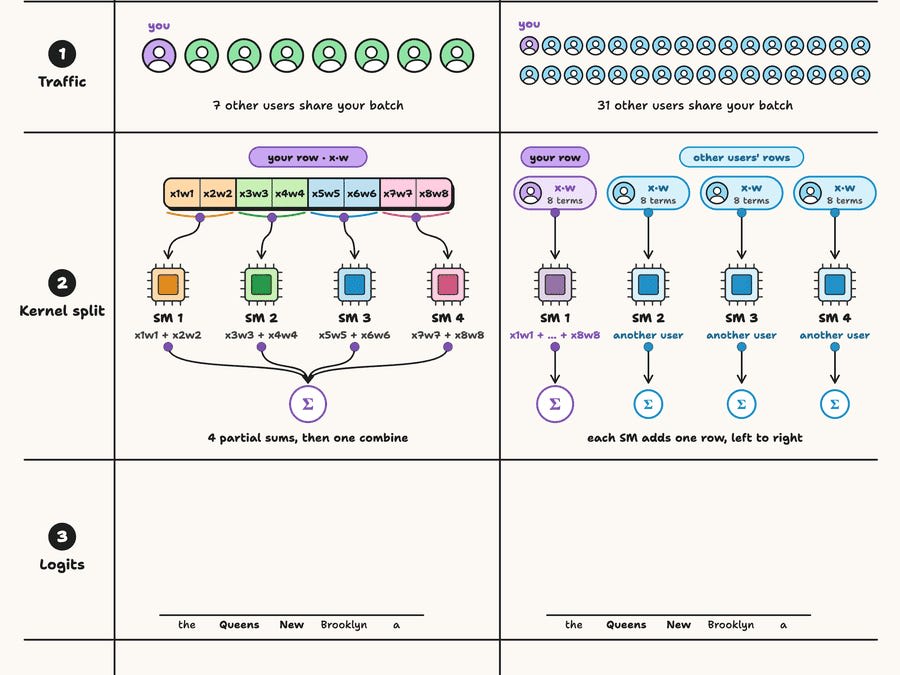
Daily Dose of Data Science | Avi Chawla | Substack12 Hot9 min
Why Other Requests Change Your LLM’s Output
+ an update on Harness Engineering 2.0.

Daily Dose of Data Science | Avi Chawla | Substack36 Hot10 minAI
6 KV Cache Quantization Approaches
Bối cảnh về KV Cache Quantization trở nên quan trọng khi inference model lớn như GPT-3 cần xử lý hàng tỷ parameters. Nguyên nhân kỹ thuật là do KV Cache chiếm tới 40% bộ nhớ VRAM, tạo ra bottleneck đáng kể cho các inference server. Hệ quả rõ ràng là việc lượng hóa KV Cache giúp giảm 50-70% bộ nhớ sử dụng và tăng tốc inference đến 30%. Điều đáng học là 6 phương pháp lượng hóa KV Cache từ các nghiên cứu gần đây của NVIDIA và Google Research đều có trade-off giữa độ chính xác và hiệu suất, tùy thuộc vào hardware support cụ thể.
Cách tiếp cận KV Cache Quantization được minh họa trực quan giúp lập trình viên hiểu và tối ưu hiệu năng mô hình ngôn ngữ.
Comments
Loading comments…