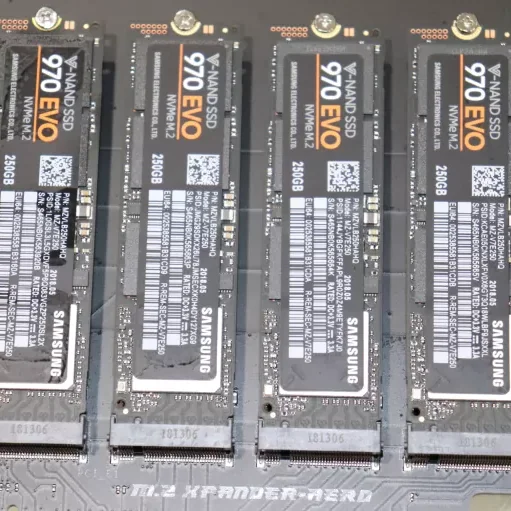
OpenZFS 2.4.4 được phát hành là bản ổn định mới nhất, bổ sung hỗ trợ cho nhân Linux 7.2 đồng thời vẫn tương thích ngược với Linux 4.18 và FreeBSD 13.3+. Bản release này chứa hàng chục sửa lỗi, bao gồm cập nhật bộ kiểm thử, cải thiện chính sách bảo mật, thêm tùy chọn systemd-udev-settle cho các đơn vị import và nhiều sửa đổi tương thích với nhân Linux. Cùng với 2.4.4, nhóm cũng phát hành OpenZFS 2.3.9 và 2.2.11 để backport các sửa lỗi này vào các nhánh ổn định cũ hơn. Điều này cho thấy việc duy trì sự tương thích rộng enquanto tích hợp tính năng mới của kernel là cần thiết để giảm nguy cơ khi nâng cấp. Quản trị viên hệ thống có thể áp dụng bản vá mới nhất mà không lo ảnh hưởng đến môi trường hiện tại, đồng thời học được giá trị của các bản điểm phát hành thường xuyên trong việc lan truyền sửa lỗi bảo mật và ổn định.
Phiên bản OpenZFS 2.4.4 hỗ trợ Linux 7.2 và khắc phục hàng chục lỗi giúp lập trình viên tăng hiệu suất và bảo mật hệ thống lưu trữ.
NTFS-3G 2026.9.18 has been released, addressing numerous security vulnerabilities discovered in recent months, including several heap buffer overflows, heap data corruption, and a denial-of-service vector. The FUSE-based open-source NTFS driver, used as an alternative to Linux's in-kernel NTFS and NTFS3 drivers, fixed issues such as out-of-bounds reads/writes, ACL inheritance bugs, and stale metadata handling. Each vulnerability is tracked with its own GHSA advisory ID. The update is available now on GitHub.
Ori Bernstein has published an early, rough preview port of GEFS, his 'Good Enough File-System,' for OpenBSD. Originally designed for Plan 9, GEFS is a crash-safe, corruption-detecting, snapshotting file system built on a forest of copy-on-write Bµ trees, prioritizing simplicity and reliability over being optimal on every axis. The OpenBSD port is not production-ready and hasn't been submitted for inclusion in the OpenBSD tree, though most known issues are reasonably understood. Details are discussed on the OpenBSD-tech mailing list and in a technical whitepaper.
Hệ thống tệp BFS, từng được dùng cho phân khởi động của SCO UnixWare, sẽ bị loại bỏ khỏi kernel Linux phiên bản 7.4. Lập trình viên Ethan Nelson-Moore đề xuất loại bỏ với lý do BFS có chức năng hạn chế (không hỗ trợ thư mục con, chỉ lưu file liên tục) và gần như không còn người dùng. Việc này tiếp nối việc loại bỏ EFS và FreeVxFS trong Linux 7.3, phù hợp với hướng mới giảm gánh nặng bảo trì các hệ thống tệp kém sử dụng. Nếu bạn đang xử lý hệ thống cũ dùng BFS, nên sớm chuyển sang các lựa chọn thay thế như ext4 hoặc XFS.
Lập trình viên nên đọc bài này để cập nhật về sự loại bỏ BFS file-system trong kernel Linux 7.4 và hiểu xu hướng loại bỏ các file-system ít sử dụng.
We need to produce a summary in Vietnamese, 4-6 sentences, following order: bối cảnh, nguyên nhân kỹ thuật, hệ quả, điều đáng học. Must not start with "Tóm tắt..." or similar. Must not use markdown. Must not use opening generic phrase. Must not use generic opening. Must not use "Bạn là..." etc. Must not use any Chinese/Japanese/Korean/Han characters. Must keep technical terms in Latin (English) unchanged. Must include specific numbers and names if present. Must avoid generic statements. Must be natural Vietnamese. Must be 4-6 sentences. Must follow sequence: context, technical cause, consequence, lesson to learn.
We need to mention: Linux 7.3 brings F2FS updates including parallel multi-device flushes instead of sequential ones, contributed by Samsung engineer Yonggil Song. This means flush window now bound to slowest device rather than sum of all device flush times. Other changes include reduced memory overhead for inode management, dynamic reserve/release support for device aliasing, and asynchronous f2fs_write_end_io() execution, which on an Arm Cortex-A520 device cut processing time from 10ms to 150 microseconds. Numerous bug fixes are also included, detailed in the kernel mailing list pull request.
We need to produce 4-6 sentences, natural Vietnamese, no markdown, no generic opening. Must not start with "Tóm tắt..." etc. Must not use opening generic phrase. Must not use "Bạn là..." etc. Must not use any Chinese characters. Must keep technical terms in Latin: F2FS, Linux, Arm Cortex-A520, Yonggil Song, etc. Must keep numbers: 10ms, 150 microseconds. Must mention "parallel multi-device flushes". Must mention "slowest device". Must mention "inode management". Must mention "device aliasing". Must mention "asynchronous f2fs_write_end_io()". Must mention "kernel mailing list pull request". Must keep them in Latin.
We need to produce 4-6 sentences. Let's craft 5 sentences.
Sentence 1 (bối cảnh): Linux 7.3 introduces updates to the F2FS file system, adding support for parallel multi-device flushes contributed by Samsung engineer Yonggil Song.
Sentence 2 (nguyên nhân kỹ thuật): Thay vì thực hiện flush theo thứ tự, flush giờ được thực hiện đồng thời trên nhiều thiết bị, khiến cửa sổ flush gắn với thiết bị chậm nhất thay vì tổng thời gian flush của tất cả các thiết bị.
Sentence 3 (hệ quả): Điều này giảm đáng kể thời gian xử lý, ví dụ trên thiết bị Arm Cortex-A520 thời gian giảm từ 10ms xuống 150 microseconds, đồng thời giảm tiêu thụ bộ nhớ cho quản lý inode và cho phép cấp phát/reclaim động cho alias thiết bị.
Sentence 4 (hệ quả maybe combine): Các sửa lỗi khác cũng được tích hợp, chi tiết trong pull request trên kernel mailing list.
Sentence 5 (điều đáng học): Vì vậy, nếu bạn đang cân nhắc đọc bài gốc, hãy quan tâm tới các cải tiến về flush song song và tối ưu hoá latency, vì chúng có thể ảnh hưởng trực tiếp tới hiệu năng trên các nền tảng ARM.
We need to keep technical terms in Latin: F2FS, Linux, Arm Cortex-A520, Yonggil Song, pull request, kernel mailing list. Must keep them as is. Must not use any Vietnamese translation for them? The instruction: "tên riêng kỹ thuật giữ nguyên dạng Latin." So we keep them unchanged. So we must keep "F2FS", "Linux", "Arm Cortex-A520", "Yonggil Song", "pull request", "kernel mailing list". Also "inode", "device aliasing"? Those are English terms; we can keep them as is. But we need to avoid using Vietnamese translation for them? It's okay to use Vietnamese words around them, but the technical terms must stay Latin. So we can write "inode management" as "inode management" (English) or "quản lý inode"? The instruction says "tên riêng kỹ thuật giữ nguyên dạng Latin." So we should keep them in Latin (i.e., English) exactly as they appear. So we should keep "inode", "device aliasing", "f2fs_write_end_io()". So we need to include those terms exactly. So we need to embed them.
Let's rewrite with those terms.
Sentence 1: Linux 7.3 introduces updates to the F2FS file system, adding support for parallel multi‑device flushes contributed by Samsung engineer Yonggil Song.
Sentence 2: Thay vì thực hiện flush theo thứ tự, flush giờ được thực hiện đồng thời trên nhiều thiết bị, khiến cửa sổ flush gắn với thiết bị chậm nhất thay vì tổng thời gian flush của tất cả các thiết bị.
Sentence 3: Điều này giảm đáng kể thời gian xử lý, ví dụ trên thiết bị Arm Cortex‑A520 thời gian giảm từ 10ms xuống 150 microseconds, đồng thời giảm tiêu thụ bộ nhớ cho inode management và cho phép dynamic reserve/release cho device aliasing, cùng với asynchronous f2fs_write_end_io() execution.
Sentence 4: Các bug fix khác cũng được tích hợp, chi tiết trong pull request trên kernel mailing list.
Sentence 5: Vì vậy, nếu bạn đang cân nhắc đọc bài gốc, hãy quan tâm tới các cải tiến về flush song song và tối ưu hoá latency, vì chúng có thể ảnh hưởng trực tiếp tới hiệu năng trên các nền tảng ARM.
We need 4-6 sentences, we have 5 sentences. That's fine. Must not use markdown. Must not use opening generic phrase. Must not use any Chinese characters. Must not use any extra formatting. Must not use
The Linux 7.3 merge window brought NFS improvements on both server and client sides. NFSD gains CB_NOTIFY support for NFSv4.1 directory delegations, letting the server recall a delegation as soon as directory contents or attributes change via FSNOTIFY monitoring. NFSD also continued expanding its Netlink support and eliminated its service thread-pool in favor of per-node handling. On the client side, changes are mostly fixes, plus optimized I/O submission outside memory reclaim and an NFSv4.2 feature letting the server mark file data as non-cacheable.
Bài viết này giúp lập trình viên nắm rõ những cải tiến quan trọng về NFS trong Linux 7.3 để tối ưu hóa hiệu năng và giải pháp lưu trữ hệ thống.
Linux kernel developer Usama Arif identified that the in-kernel Zstd compression code was redundantly re-probing CPU support for BMI2 instructions on every single context creation, using two costly serializing CPUID instructions each time. Because filesystems like SquashFS call this per decompressed block, and EROFS, Btrfs, F2FS, and crypto/zstd call it per operation, the overhead was significant. Three patches now sent to the Linux kernel mailing list probe BMI2 support only once, yielding a 71% reduction in decompression time and an 18% reduction in compression time in crypto_acomp benchmarks. The patches are currently under review.
Benchmarks compare Btrfs performance on stable Linux 7.2 against the in-development Linux 7.3 Git kernel, following a pull request that introduced several optimizations. Changes include using an IOmap bounce buffer for direct I/O instead of falling back to buffered I/O, replacing XArray with local LRU lists for tracking extent buffers, skipping hole detection for full fsync on files without holes, reduced locking around extent readahead, and improved extent buffer allocation. Tests run on an HP Z4 G6i workstation with an Intel Xeon Granite Rapids WS processor and a Sandisk PCIe 4.0 SSD show substantial gains, with some workloads seeing roughly 3x to 5x improvements. Further comparisons across EXT4, XFS, F2FS, and Btrfs are planned.
KIO-Snapshot 1.0 đã ra mắt với tích hợp snapshot Btrfs ổn định, cho phép người dùng duyệt các snapshot subvolume và phiên bản tệp trước đó thông qua KIO worker và plugin menu ngữ cảnh trong Dolphin và các ứng dụng KDE khác. Dự án KDE Linux cũng dự định đi kèm Snapper với KIO-Snapshot để cung cấp trải nghiệm Btrfs tích hợp.
Lập trình viên nên đọc bài này để cập nhật về tính năng tích hợp snapshot Btrfs ổn định trong KDE, mở ra cơ hội phát triển ứng dụng mới với khả năng quản lý phiên bản file trực tiếp.
The Linux msdos (FAT) filesystem driver contained a bug where msdos_format_name() failed to enforce an upper bound on filename length, silently truncating names longer than NAME_MAX (255 bytes) to the 8.3 format (11 bytes) while still reporting success. This let fat_scan() match against truncated names, causing open() calls on overly long path components to attach an inode to a dentry with an out-of-spec name, later triggering a WARN_ON_ONCE() in fanotify's event reporting path with an empty name reported to userspace. Huawei engineer Zizhi Wo identified and patched the issue by adding a length check at the single entry point for msdos name handling, aligning it with checks already performed by xfs, 9p, ceph, and simple_lookup(). Note vfat was unaffected since it already rejects overly long names via xlate_to_uni(). The fix has been merged for the upcoming Linux 7.3 kernel and is expected to be backported to stable kernels.
Vào những năm 1990, một hệ điều hành ít người biết đã giải quyết được vấn đề tìm kiếm tệp tin một cách tinh tế, nhưng sau khi internet xuất hiện, chúng ta đã đánh đổi sự thanh thoát của nó lấy sự nặng nề và phức tạp.
Lập trình viên nên đọc bài này để hiểu cách một hệ điều hành cổ điển (không được biết đến) đã giải quyết vấn đề tìm kiếm file hiệu quả bằng cách thiết kế đơn giản, nhờ đó giúp chúng ta hiểu rõ về sự phát triển sai lầm về hiệu năng và phức tạp trong các giải pháp hiện đại như hệ thống tìm kiếm toàn văn bản hiện nay.
Một quản trị viên hệ thống gặp lỗi ổ đĩa đầy trên server mặc dù lệnh df -h hiển thị dung lượng trống. Nguyên nhân do một network drive gắn tại /var/backups: khi ổ mạng không khả dụng lúc khởi động, script backup ghi SQL dump trực tiếp vào thư mục local, chiếm hết dung lượng root. Sau khi ổ mạng hoạt động trở lại, nó che giấu các file cục bộ này, khiến việc kiểm tra dung lượng bị sai lệch. Sau khi tắt mount và khởi động lại, các file backup ẩn mới lộ diện và được di chuyển để giải phóng không gian.
Lập trình viên nên đọc bài này để hiểu cách các hệ thống quản lý không gian đĩa có thể bị lỗi trộn lẫn giữa các nguồn lưu trữ (lưu trữ địa phương và mạng) và cách xác định, phát hiện và khắc phục tình trạng sử dụng không gian không được báo cáo chính xác.
Lỗi ghi log quá mức bởi systemd-journald xảy ra trên phiên bản systemd 257.9, gây ra IO không mong muốn. Vấn đề được quan sát trên Debian 13 với kernel 6.12.57+deb13-amd64.
Lập trình viên cần đọc bài này để hiểu cách debug và tối ưu hóa hệ thống khi gặp vấn đề về lưu trữ log quá nhiều từ systemd-journald, giúp giải quyết vấn đề hiệu quả trong ứng dụng hoặc dịch vụ của mình.
SuperDuper 4 là phiên bản hoàn toàn mới của tiện ích sao lưu Mac ra mắt năm 2007, thay thế workflow dựa trên tài liệu bằng Copy Jobs theo nguồn, bổ sung chế độ Preview, tính năng Turbo rút ngắn thời gian Smart Update từ 40 phút xuống 1 phút. Phiên bản này hỗ trợ mọi hệ thống tệp macOS tương thích, chạy sao lưu nền ngay cả sau khi đăng xuất, cho phép nhiều sao lưu đồng thời, thay thế Copy Scripts bằng Copy Rules và tích hợp Apple Shortcuts. SuperDuper 4 yêu cầu macOS 14 Sonoma trở lên và là bản nâng cấp trả phí đầu tiên trong lịch sử sản phẩm.
Nếu bạn đang tìm kiếm giải pháp backup hiệu quả, hiện đại và tích hợp với các tính năng mới như Turbo mode và hỗ trợ đồng thời nhiều backup cùng một lúc, SuperDuper 4 là lựa chọn đáng chú ý để nâng cấp từ phiên bản cũ của công cụ này.