Loading feed…

The Next Web0 Hot0 comments2 min read
AI inference startup Fal doubles its value to $16B in a $1.3B round
Fal, which runs image, video and audio AI models for developers, raised $1.3B led by Bessemer at a $16B valuation, double its value in April.
Source: https://thenextweb.com/news/fal-1-3b-bessemer-16b-valuation-ai-inference. 8 Sync News only summarizes and links out; content copyright belongs to the authors and original sources.
8 Sync ecosystem
One account, the whole ecosystem
Read the news here, practice coding, follow structured courses and train for IELTS on our sibling products — all connected through one 8 Sync account.
8syncdev.com
8syncdev.comThe ecosystem home: product overviews, blog and full pricing.
ExploreCourses
course.8syncdev.comLearn along a clear roadmap: videos, auto-graded quizzes, certificates and mentors who ship for a living.
View the roadmapCoding practice
coding.8syncdev.com1,000 DSA problems in Vietnamese, auto-graded across 7 languages — many FREE, right in your browser.
Practice for freeIELTS
ielts.8syncdev.comAI grading for all four IELTS skills with detailed rubric feedback.
Try it freeZUS — AI IDE
zus.8syncdev.comA 22 MB AI IDE for Vietnamese devs.
Download freemind0
mind0.8syncdev.comOrganizational memory for AI agents.
ExploreAcoLeads
home-acoleads.8syncdev.comAI that staffs your Fanpage and qualifies leads for you.
Try itRecommended for you

Hugging Face2 Hot6 min
Nemotron-Personas-Finance-Japan: A Synthetic Dataset Capturing Japan's Demographics and Financial Context
A Blog post by NVIDIA on Hugging Face

Daily Dose of Data Science | Avi Chawla | Substack50 Hot8 min
7 MoE routing strategies in production, clearly explained
+ a practical learning checklist to learn AI engineering.

Flavio Copes132 Hot6 min
How to run an LLM locally
Run an LLM locally with Ollama. See how much memory you need, where LM Studio and llama.cpp fit, and how to call the model from code.
Daily Dose of Data Science | Avi Chawla | Substack151 Hot7 min
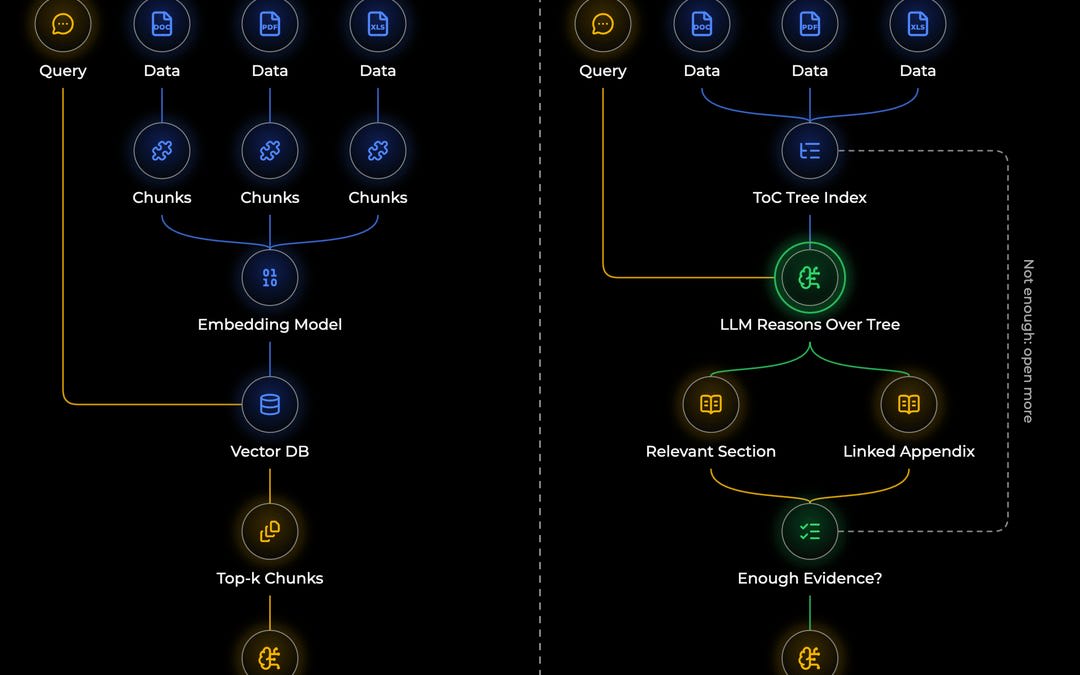
RAG vs. Vectorless RAG, clearly explained!
...explained visually (with tradeoffs in production).

DEV2 Hot3 min
When the Political Shift Hits the Cluster: What the 2026 Midterms Mean for AI Infra and Code
If you’ve been watching the tech sector and macroeconomic feeds over the last 48 hours, you’ve... Tagged with discuss, ai, webdev, programming.
Daily Dose of Data Science | Avi Chawla | Substack12 Hot9 min
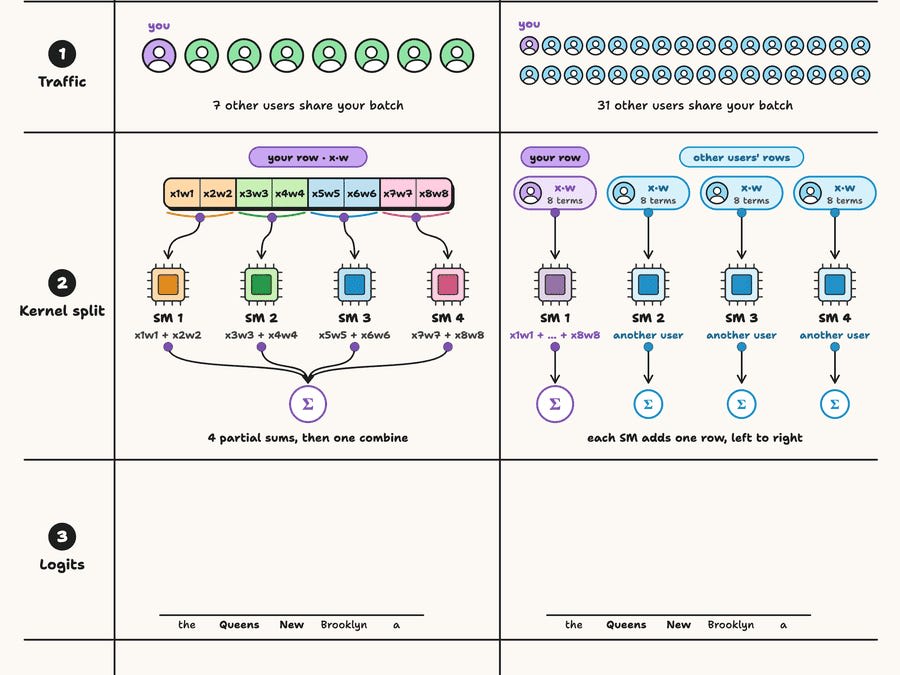
Why Other Requests Change Your LLM’s Output
+ an update on Harness Engineering 2.0.

DEVCLASS1 Hot4 min
PyTorch 2.15 tackles the 'one bad GPU' problem
PyTorch 2.15 ships a rewritten NCCL backend that stops a single failing GPU from forcing a full training restart. The new ProcessGroupNCCL allows only one communicator per process group during initialization, which by default eliminates the crosstalk that the old version's many communicators caused. A third-party orchestrator can now exclude a crashed or slow GPU and assign a replacement worker. A new 'flight recorder' captures operation snapshots for debugging stalls. The legacy backend remains as a rollback option but will be removed in 2.16, planned for early next year. The release also totals 3,117 commits from 583 contributors and includes parallel processing improvements for Apple gear and support for Nvidia's next-generation Blackwell GPUs.

Daily Dose of Data Science | Avi Chawla | Substack36 Hot10 minAI
6 KV Cache Quantization Approaches
Bối cảnh về KV Cache Quantization trở nên quan trọng khi inference model lớn như GPT-3 cần xử lý hàng tỷ parameters. Nguyên nhân kỹ thuật là do KV Cache chiếm tới 40% bộ nhớ VRAM, tạo ra bottleneck đáng kể cho các inference server. Hệ quả rõ ràng là việc lượng hóa KV Cache giúp giảm 50-70% bộ nhớ sử dụng và tăng tốc inference đến 30%. Điều đáng học là 6 phương pháp lượng hóa KV Cache từ các nghiên cứu gần đây của NVIDIA và Google Research đều có trade-off giữa độ chính xác và hiệu suất, tùy thuộc vào hardware support cụ thể.
Cách tiếp cận KV Cache Quantization được minh họa trực quan giúp lập trình viên hiểu và tối ưu hiệu năng mô hình ngôn ngữ.
Comments
Loading comments…